Teaching September 11 to Students Who Weren't Born Yet
None of my students were alive on September 11, 2001. Most of their parents were kids themselves. For my classroom, September 11 isn't a memory, it's history, the same category as the Cold War or the Civil Rights Movement, and I have to teach it that way instead of assuming a student already carries some inherited weight around the date.
Why I Don't Start With My Own Story
I used to open the unit by telling students where I was that morning. It felt natural. It also turned the lesson into my memory instead of their learning. Once I stopped leading with my own account, the unit got stronger, because it stopped being about convincing them the day mattered and started being about handing them the evidence and letting them work through what happened.
Primary Sources Carry the Weight, Not Me
If you lecture your way through September 11, you end up either flattening it into a timeline of facts or leaning so hard into the emotional weight that the lesson starts to feel like a performance. Primary sources sidestep both problems. When students are reading actual records, actual timelines, and actual decisions made that day and in the years after, they're not waiting for me to tell them how to feel. They're doing the harder, better work of drawing their own conclusions from real evidence.
That's the whole premise behind How We Know What Happened: The Evidence Record: it's built around the actual documentation, not a narrated version of it. Same with Ground Zero Forensics, which walks students through how victims were identified using science, not speculation.
Handling the Weight Without a Lecture
A few things I've learned running this unit without either checking out emotionally or leaning too hard into shock value:
- Give context before content. Students need to know roughly what happened before they read primary sources about it, or the sources won't make sense.
- Let the questions do the emotional work. A well-built comprehension question that asks a student to explain why something mattered does more than a speech from me ever could.
- Don't chase reaction. I'm not trying to make anyone cry. I'm trying to make sure they understand what happened and why it still shapes policy, security, and daily life today.
- Keep it academic, not memorial. My classroom isn't the place for a moment of silence assembly. It's the place where students build the skills to read hard history critically.
Why This Approach Works for Students Who Feel Disconnected
A lot of my students in credit recovery already feel like history class is something that happens to other people, in other decades, to people who aren't them. September 11 can feel especially distant since it predates them entirely. Primary sources close that gap better than my narration does, because the source material is the same material adults were reading in real time. Students aren't getting a summary. They're getting the record itself, and drawing conclusions from it the way historians actually do.
What's in My September 11 Line
Every toolkit in my September 11 library is built the same way: real documentation, structured questions, and enough scaffolding that a student who's never studied the event can walk in and come out understanding not just what happened, but how we know it happened and why it still matters.
I'm not trying to tell my students how to feel about September 11. I'm trying to give them the tools to understand it the way any serious historical event deserves to be understood: carefully, with evidence, and without me putting my thumb on the scale.
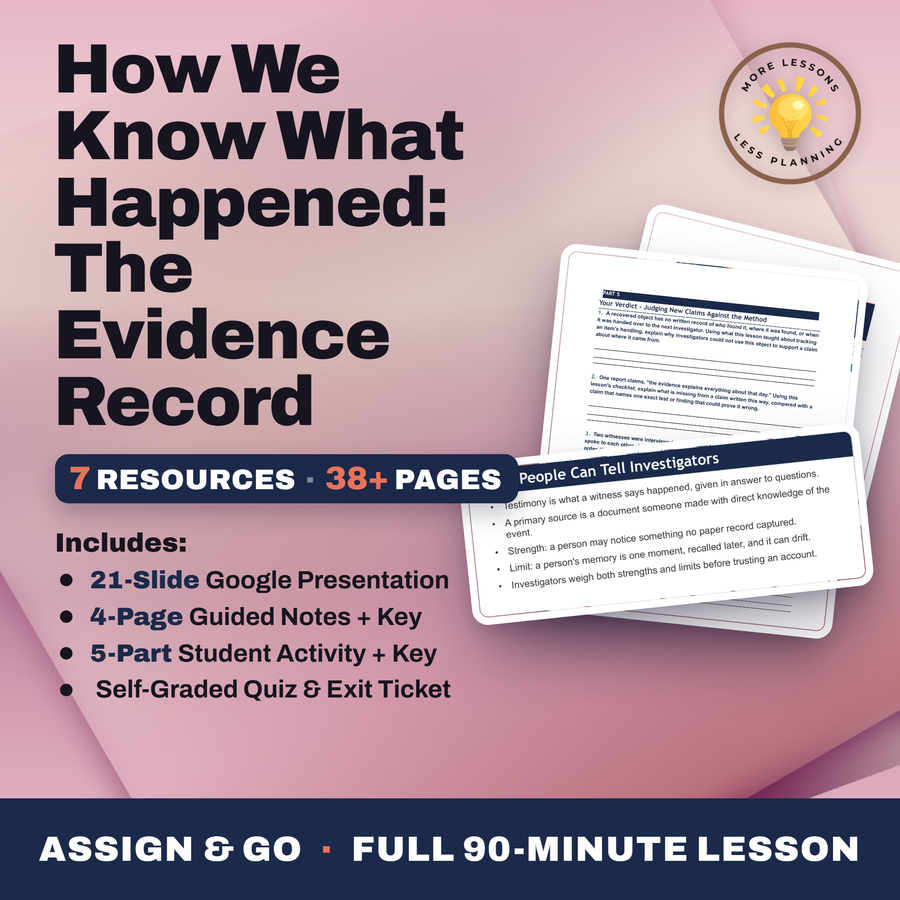
How We Know What Happened: The Evidence Record
Everything referenced in this post, in one download.
See it ($8.99)