
Ground Zero Forensics
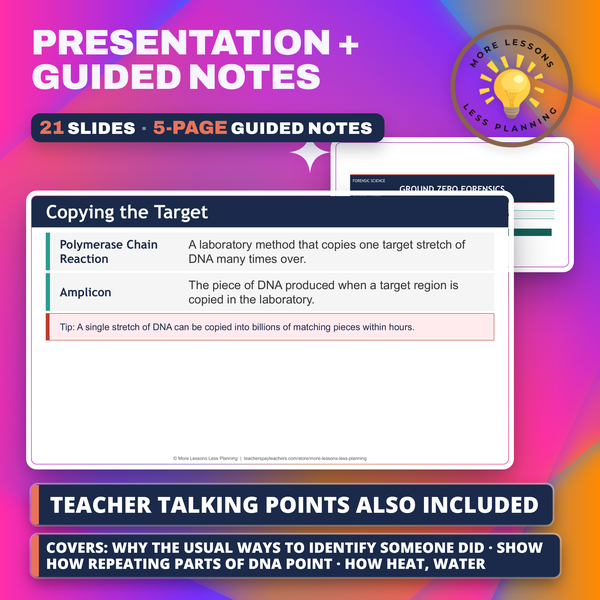
- Slide deck
- Guided notes
- Guided notes teacher key
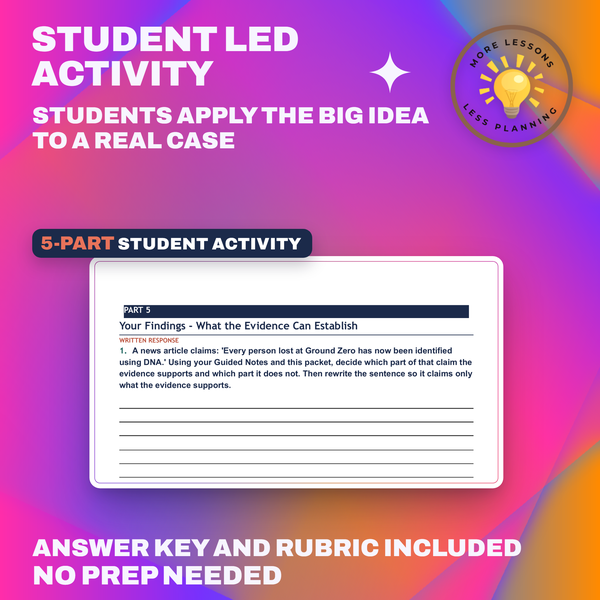
- Activity + answer key
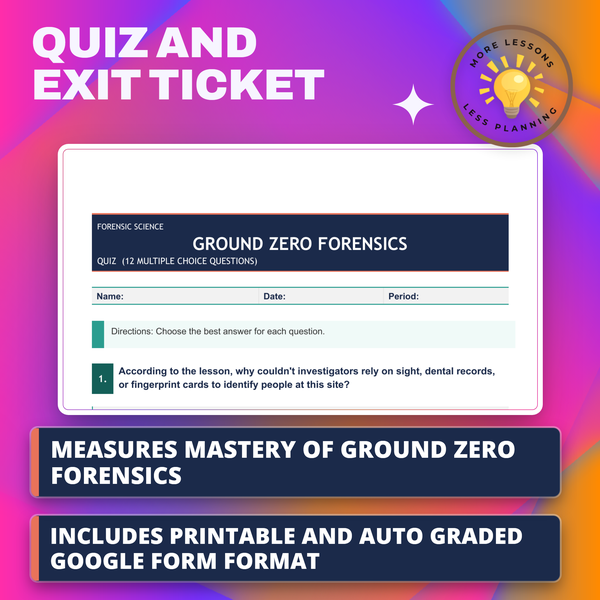
- Quiz (paper + self-grading Google Form) + answer key
- Exit ticket + answer key
- Teacher guide
- Teacher presentation notes
From one teacher to another
I built this for the day my forensic science students ask why identifying everyone after 9/11 took so long, and the honest answer is a science lesson, not a history lesson. The usual tools, fingerprints and dental records, needed material that didn't survive the site. So this toolkit walks through why short tandem repeats can identify a person from a fragment, what PCR actually does to a degraded sample, and how heat, water, and months of exposure break DNA down past the point a standard test can read it.
Students compare three ways forensic scientists worked around degraded material: mitochondrial DNA, miniplex testing, and single nucleotide polymorphism typing, and they land on why none of it matters without a reference sample to match against. The primary source is the National Institute of Justice's own report on what worked and what didn't, so kids are reading the agency's account instead of mine. I kept the images to two public-domain documentary photos, no remains, no named individuals, because the science can carry the lesson without ever being disrespectful about it.
Everything here is built to hand off cold: guided notes tied to the slides, an activity with a reference guide and a comparison grid for the three testing methods, a teacher guide, and both assessments already set up as self-grading Google Forms.